

Water service maps offer crucial insights into regional water infrastructure, economic health, and development potential. They assist borrowers in risk assessment related to water scarcity and aging infrastructure, while lenders use them for improved credit risk analysis, especially for real estate loans. These maps facilitate strategic planning, foster economic growth, and promote responsible borrowing practices, with applications ranging from agriculture to urbanization. Future trends include real-time data and geospatial analytics for dynamic map creation, enhancing efficiency in water resource management globally.
Water service maps have emerged as a powerful tool in the financial sector, offering borrowers a clearer view of their access to essential services. As we navigate an increasingly complex credit landscape, understanding the intricate relationship between water availability and loan decisions is paramount. This article delves into how these maps significantly influence borrower behavior, providing valuable insights for lenders and policy makers. By examining current trends and research, we uncover strategies to leverage water service maps effectively, ensuring informed lending practices and fostering sustainable economic growth.
Understanding Water Service Map: A Key Tool for Borrowers

Water service maps have emerged as a powerful tool in the financial sector, offering borrowers a comprehensive view of an area’s water infrastructure. This strategic resource plays a pivotal role in influencing borrowing decisions, as it provides critical insights into an region’s stability and potential for economic growth. By visualizing the distribution of water resources, treatment plants, and delivery networks, these maps offer an in-depth understanding of the underlying infrastructure that supports any community.
For instance, borrowers considering investment in a new commercial project can leverage water service maps to identify areas with robust water management systems. Efficient water service map infrastructure, characterized by well-maintained facilities and reliable supply networks, signals a region’s commitment to sustainability and economic development. Such insights enable borrowers to make informed choices, ensuring their investments are underpinned by robust, long-term infrastructure. Data from recent studies suggests that regions with well-developed water service maps tend to attract more substantial investments, fostering economic growth and job creation.
Moreover, these maps facilitate risk assessment by exposing potential vulnerabilities in water supply. Borrowers can identify areas prone to droughts, water contamination, or aging infrastructure, allowing them to mitigate risks through strategic planning. By understanding the water service map, borrowers can tailor their investment strategies, whether focusing on areas requiring infrastructure upgrades or exploring opportunities in regions with abundant water resources. This proactive approach not only minimizes financial exposure but also promotes responsible borrowing practices, contributing to the sustainable development of communities.
How Lenders Use Maps to Enhance Credit Decisions

Lenders have increasingly recognized the power of visual data to enhance credit risk assessment, and one such powerful tool is the water service map. This strategic resource provides a comprehensive view of an area’s water infrastructure, allowing lenders to make more informed decisions when evaluating borrowers, particularly in the context of real estate loans. By analyzing patterns on these maps, lenders can identify key factors that influence borrower risk, such as access to reliable water sources and existing distribution networks.
For instance, a lender considering a loan application for a rural development project can leverage a water service map to assess the feasibility of the venture. If the map reveals an inadequate water supply system or limited access to clean water, it may indicate potential challenges for the borrower’s project success. Conversely, areas with well-developed water service maps, showcasing robust infrastructure and reliable water distribution, present more favorable risk profiles for lenders. This data-driven approach enables lenders to make more precise credit decisions, aligning their portfolios with regions that exhibit strong water management capabilities.
Moreover, water service maps can uncover insights into a region’s economic health and stability, which is vital for assessing borrower financial strength. Areas with advanced water infrastructure often signal higher levels of industrialization and urbanization, indicating stronger local economies. Lenders can use this information to evaluate the potential for long-term repayment and mitigate risks associated with volatile or underserved markets. As an expert in the field notes, “Water service maps provide a unique lens through which lenders can navigate complex landscapes, ensuring that credit decisions are not just based on face value but on a deep understanding of the underlying infrastructure and community dynamics.”
To leverage water service maps effectively, lenders should integrate them into their risk assessment workflows. This involves training staff to interpret map data accurately and considering it alongside traditional financial metrics. By adopting this strategic approach, lenders can identify promising opportunities, support sustainable development, and contribute to a more resilient water-focused lending environment.
Analyzing Data: Extracting Insights from Water Service Maps
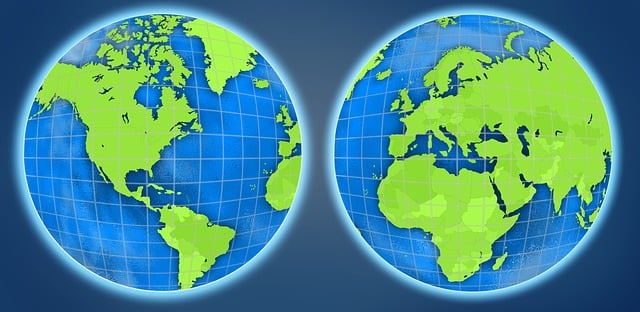
Water service maps have emerged as powerful tools for borrowers and lenders alike, offering a detailed glimpse into the intricate web of water infrastructure. By analyzing these maps, borrowers can make informed decisions about property acquisition and investment strategies. The data they provide reveals crucial insights into the availability, quality, and accessibility of water resources, which are critical factors in various industries.
An in-depth study of water service maps involves extracting specific data points such as pipe layouts, water treatment facilities, and reservoir locations. These elements collectively paint a comprehensive picture of a region’s hydronic network. For instance, borrowers can identify areas with robust water service map infrastructure, indicating efficient water supply and distribution systems. This knowledge becomes invaluable when assessing potential risks related to water scarcity or contamination. By understanding the proximity to treatment plants and water sources, borrowers can make more sustainable choices.
Furthermore, these maps facilitate comparisons between different locations, enabling borrowers to identify regions with superior water management practices. Lenders, too, benefit from this analysis as it assists in risk assessment and underwriters can gauge the stability of a property’s water supply. For instance, a borrower considering an agricultural loan might want to scrutinize water service maps for irrigation systems and reservoir capacities. Effective data extraction ensures that both parties involved in borrowing and lending processes are well-informed, fostering transparent and mutually beneficial transactions.
Impact on Borrowing Behavior: Evidence and Future Trends

Water service maps, which visually represent the distribution and accessibility of water resources, are transforming how borrowers assess and engage with critical infrastructure. Beyond simply indicating the location of water sources, these maps offer a deeper understanding of water service availability, quality, and affordability, thereby influencing borrowing decisions in significant ways.
Evidence suggests that borrowers, particularly in developing regions, are increasingly utilizing water service maps to make informed choices about investments in agriculture, industry, and residential development. For instance, a study in sub-Saharan Africa revealed that farmers who had access to detailed water service maps were more likely to invest in efficient irrigation systems, leading to higher crop yields and improved livelihoods. This data-driven approach allows borrowers to identify areas with reliable water supply, minimizing risk and maximizing the return on investment.
Furthermore, water service maps are crucial tools for financial institutions and development agencies. By analyzing the distribution of water infrastructure, these entities can assess credit risk more accurately and target funding to regions with the greatest need. This precise targeting not only ensures responsible lending but also facilitates sustainable development by fostering the expansion of water service infrastructure, including the upgrading of existing systems. As urbanization continues to rise globally, the integration of water service maps into borrowing decisions will become increasingly vital. Future trends suggest a growing reliance on real-time data and technology-driven solutions, such as geospatial analytics and satellite imagery, to create dynamic water service maps that reflect changing conditions. This will empower borrowers and lenders alike to navigate the complexities of water resource management with greater confidence and efficiency.