
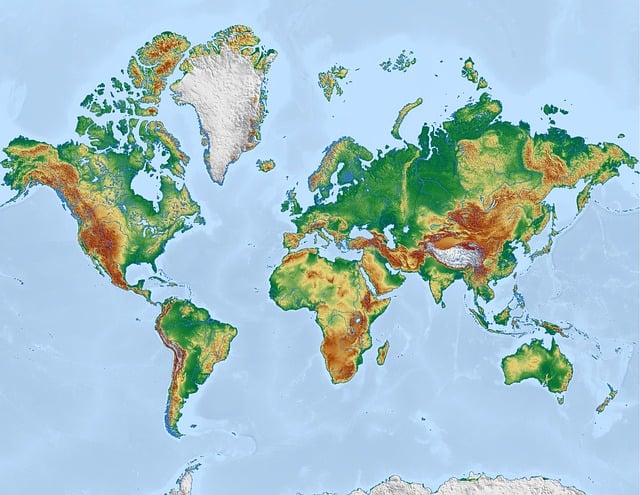
Water service maps are indispensable tools for investors seeking to navigate and capitalize on water infrastructure investments. These maps provide a comprehensive view of regional water networks, enabling the identification of urbanization-driven demand growth and potential expansion areas. By analyzing map data alongside historical trends, investors can anticipate market shifts towards smart water management and environmental stewardship. Understanding infrastructure interconnections aids in risk assessment and portfolio diversification during economic downturns. Key insights include identifying robust water systems and favorable investment conditions.
Investor strategies benefit from predictive modeling, which forecasts future demand, supply constraints, and risks based on historical map data and patterns. This enables informed decisions, risk minimization, and sustainable water management practices. Integrating water service maps with geographical and demographic factors allows for targeted investments addressing aging systems and underserved communities, fostering both profitability and community development.
Water service maps have emerged as a critical tool for investors navigating the global water market, offering invaluable insights into regional trends and infrastructure needs. However, understanding these maps’ implications on costs can be complex. This article provides an in-depth guide to help investors harness the power of water service maps effectively. We’ll explore how these maps reveal market dynamics, identify investment opportunities, and mitigate risks by shedding light on cost drivers and emerging trends. By mastering this tool, investors can make informed decisions, ensuring their strategies align with the evolving landscape of the water sector.
Understanding Water Service Map: A Key Market Asset

Water service maps are a critical asset for investors looking to navigate and understand the intricate web of water infrastructure. These maps offer a comprehensive view of a region’s water supply network, including treatment plants, distribution systems, and storage facilities. By analyzing this data, investors can make informed decisions about where to allocate resources, identify potential risks, and capitalize on emerging opportunities.
A water service map provides a detailed blueprint of the entire water cycle within a specific area. It highlights key components such as water sources, treatment plants capable of purifying raw water, distribution networks that deliver treated water to homes, businesses, and industries, and storage reservoirs that ensure a steady supply during times of high demand. For instance, in urban areas, maps can show the vast network of pipes and pumps that keep cities running smoothly, while in rural regions, they may indicate the location of community wells and individual property water systems.
The strategic value of these maps becomes evident when considering market trends. Investors can identify regions with aging infrastructure requiring significant upgrades or areas experiencing rapid population growth, leading to increased demand for water services. For example, a study by the World Bank revealed that global water demand is expected to grow by 20% by 2030, driven mainly by urbanization and rising incomes. By understanding this trend through water service maps, investors can anticipate areas with potential for expansion and development. Moreover, these maps facilitate informed risk assessment, helping identify vulnerabilities in existing infrastructure and potential environmental impacts.
Incorporating water service maps into investment strategies is a forward-thinking approach that aligns with the growing importance of sustainable water management. Investors who embrace this tool gain a competitive edge by making data-driven decisions, ensuring their investments are not only profitable but also contribute to the long-term resilience and sustainability of local communities.
Decoding Trends: Unlocking Investor Opportunities

Water service maps, an intricate representation of infrastructure networks, offer a powerful tool for investors seeking strategic advantages in today’s market. By decoding trends within these maps, investors can uncover valuable insights that drive informed decisions. The water service map infrastructure reveals key patterns—pipelines, treatment plants, and distribution networks—that are vital indicators of a region’s economic health and future prospects. For instance, a well-maintained, expanding network suggests robust demand and growth potential, attracting investors keen on long-term sustainability.
Analyzing historical data alongside these maps can provide a strategic edge. Trends in water consumption, population growth, and infrastructure development often mirror broader market dynamics. Investors can identify emerging trends, such as the shift towards smart water management systems, which not only enhance efficiency but also indicate forward-thinking urban planning. For example, cities embracing innovative water recycling technologies are not just reducing costs but also signaling a commitment to environmental stewardship, a growing concern among investors.
Furthermore, understanding the interconnection between water service maps and market trends enables investors to assess risks and opportunities in diverse sectors. The water sector’s resilience during economic downturns, for instance, has been well-documented. By identifying regions with strong water infrastructure and favorable market conditions, investors can strategically allocate resources. This proactive approach leverages the stability of water service map investments, ensuring a diversified portfolio while navigating today’s complex economic landscape.
Cost Analysis: Mapping Out Financial Implications

Understanding the financial implications of water service map infrastructure is crucial for investors looking to navigate this complex sector. A comprehensive analysis of these maps reveals the direct correlation between the state of water service map networks and associated costs. By examining the geographic distribution of aging or inefficient infrastructures, investors can anticipate potential expenses related to upgrades, maintenance, and regulatory compliance. For instance, regions with largely outdated pipe networks may face substantial capital outlay for replacement and modernization, impacting overall investment strategies.
Water service map infrastructure plays a pivotal role in determining the operational and financial health of water utilities. Investors must consider the long-term sustainability of these assets. A strategic approach involves assessing the map’s ability to support growing demand while adhering to environmental standards. For example, investments in smart water meters and digital mapping technologies can optimize resource allocation, reduce leakage, and enhance customer service. These modernizations not only lower operational costs but also attract environmentally conscious investors who value sustainable practices within the sector.
Furthermore, a detailed analysis of water service map data allows for trend identification and informed decision-making. Investors should track key metrics such as water loss rates, customer connection growth, and infrastructure failure frequencies. Such insights enable proactive cost management. For instance, identifying high water loss areas may prompt targeted investments in rehabilitation projects, preventing widespread network failures and associated repair costs. Staying abreast of regulatory changes related to water service map infrastructure is also essential, as new standards can significantly influence capital expenditure plans.
In conclusion, effectively utilizing water service map data for cost analysis empowers investors to make strategic choices. By understanding the financial implications of infrastructure, investors can align their portfolios with profitable opportunities while managing risks. This approach ensures that investments in water services are not only economically viable but also contribute to building resilient and sustainable communities.
Predictive Modeling: Foreseeing Market Shifts
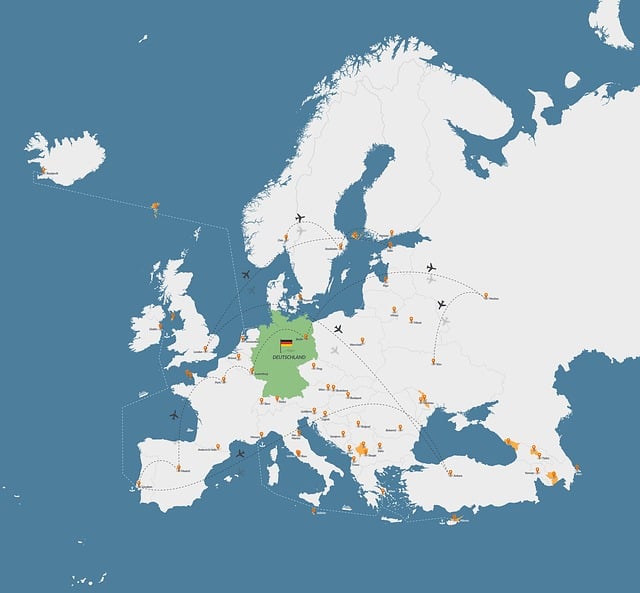
In the realm of water service map analysis, predictive modeling stands as a powerful tool for investors to navigate market trends and anticipate shifts in the dynamic landscape of water infrastructure. This method involves delving into historical data, identifying patterns, and utilizing sophisticated algorithms to forecast future demand, supply constraints, and potential investment risks or opportunities. A comprehensive water service map can serve as a critical asset here, providing an intricate view of existing and proposed water distribution networks, treatment facilities, and storage systems within a specific region.
By examining this map, investors can uncover valuable insights into the market’s current state and future trajectory. For instance, identifying areas with rapidly growing populations or industries that demand significant water supplies can help predict upcoming bottlenecks in water service map infrastructure. This knowledge enables proactive investments in expanding or upgrading water treatment plants, pipelines, and storage tanks to meet rising demands. Moreover, predictive modeling can account for potential environmental factors, such as climate change impacts on water resources, ensuring that investment strategies are resilient and adaptable.
Practical implementation involves leveraging advanced statistical techniques and machine learning algorithms to analyze vast datasets from water utility companies, government agencies, and satellite imagery. These models can then generate scenarios that illustrate various market outcomes based on different variables. For example, a scenario could explore the effects of an extreme weather event on water infrastructure or the impact of regulatory changes on water pricing and demand. Through such simulations, investors can make informed decisions about where to focus their investments, ensuring they are aligned with emerging trends in the water service map. This strategic approach not only minimizes financial risks but also contributes to sustainable and efficient water management practices, fostering a robust market ecosystem.
Strategizing Investments: Leveraging Map Insights

Water service maps are powerful tools that offer investors a strategic advantage by providing valuable insights into the infrastructure landscape. By analyzing these maps, investors can make informed decisions about where to allocate resources and identify opportunities for growth. The water service map infrastructure reveals crucial information about existing and potential networks, allowing professionals to assess market trends and plan accordingly. For instance, a thorough examination of such a map may unveil areas with aging systems in need of significant upgrades, presenting an investment case for companies specializing in modern water infrastructure solutions.
Strategizing investments based on water service map data involves identifying regions with high demand or underserved populations. These maps often highlight gaps in current service delivery, indicating areas ripe for new development. For example, a map might reveal a rural community lacking access to clean water infrastructure, presenting an opportunity for investors to back projects that provide sustainable solutions. Moreover, analyzing trends over time can help anticipate future demands and emerging market shifts, ensuring investments stay ahead of the curve.
Expert advice suggests that investors should consider the unique characteristics of each location, such as geographical features and population density, which can impact water service map dynamics. Integrating this contextual data with market research enables a more nuanced approach to investment decisions. By leveraging the insights from water service maps, investors can navigate complex landscapes, foster sustainable development, and ultimately maximize returns while contributing to vital community needs.